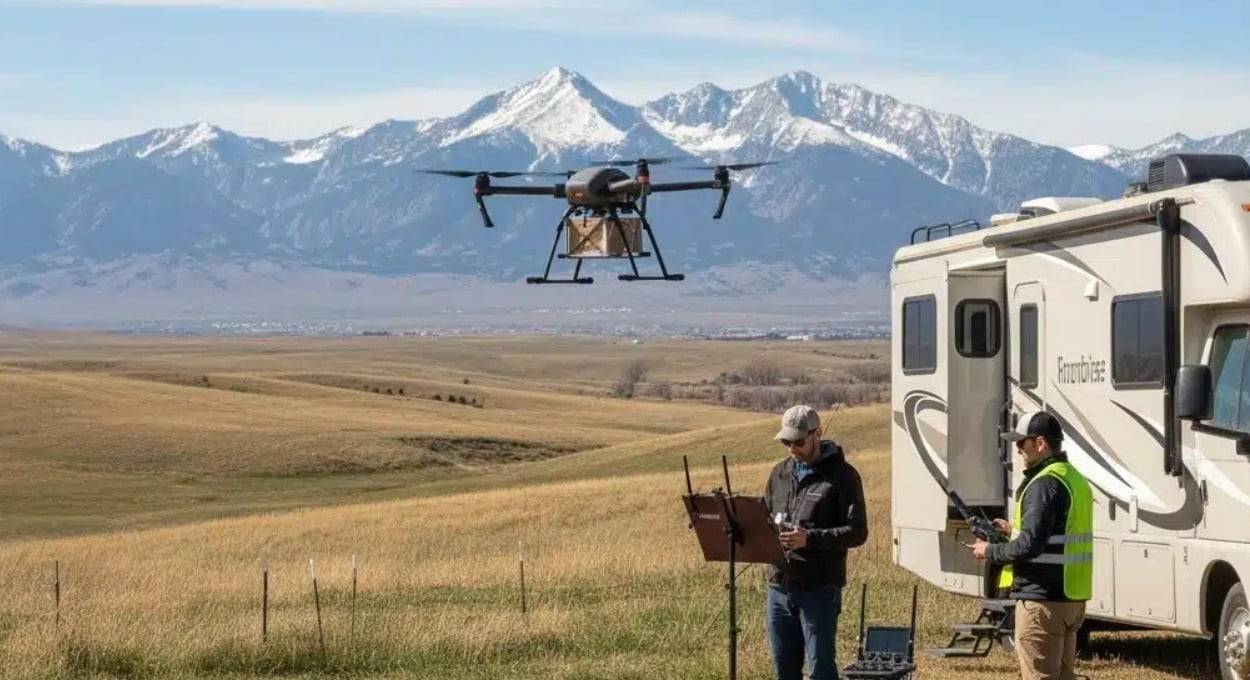
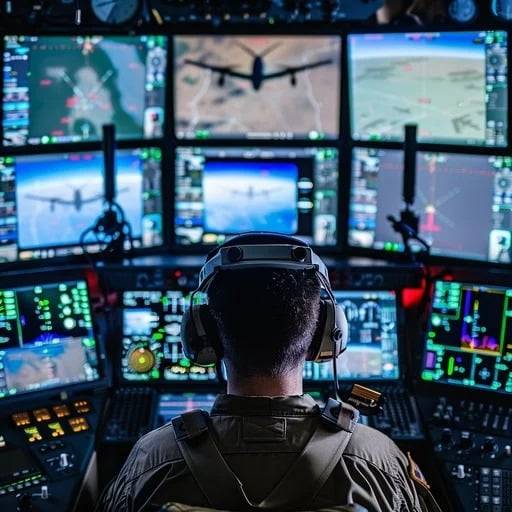
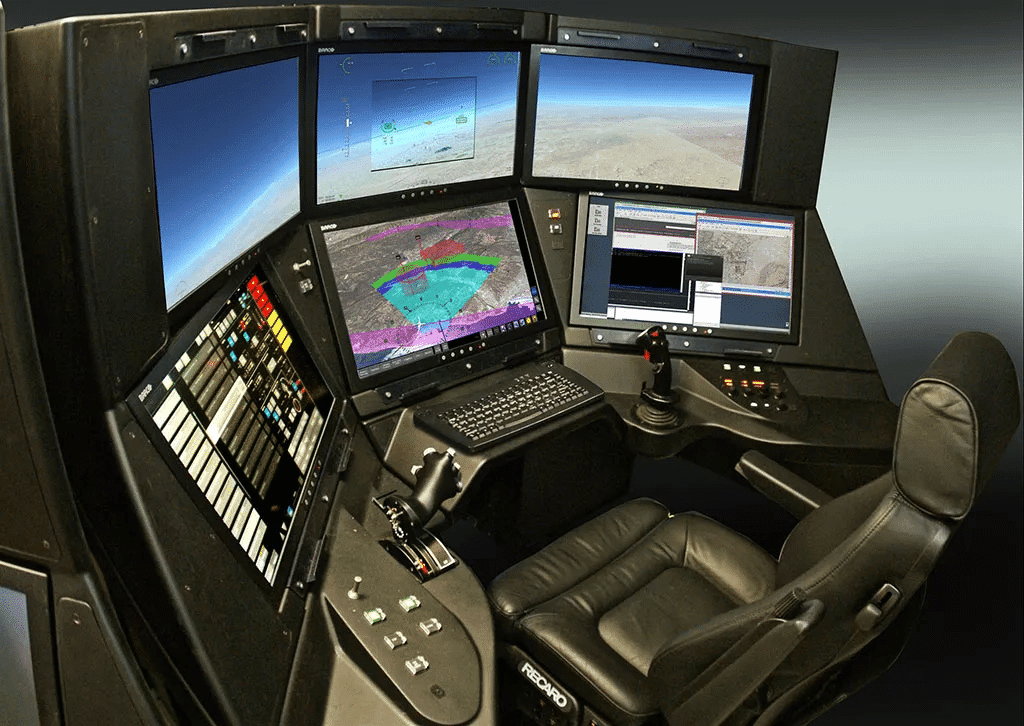
Modern drone warfare often unfolds in rooms that look strikingly familiar to anyone who has spent time in the gaming world.
Multiple screens.
Joystick or gamepad-style controllers.
First-person video feeds.
Real-time telemetry and target tracking.
For the operators inside these rooms, the interface can resemble a sophisticated simulation environment. But the consequences are not virtual.
Across Ukraine, the Middle East, and other modern conflict zones, remotely operated and increasingly autonomous systems are reshaping how combat decisions are made and executed. At the same time, the technological culture that produces many of these systems — software engineering, gaming, simulation, and robotics — often originates in environments designed for experimentation and rapid iteration.
That overlap is not inherently problematic. In fact, gaming culture has contributed valuable skills to the development of modern drone operations. But it also raises an uncomfortable question for the defense technology ecosystem:
When warfare is mediated through screens, how do we ensure that the people building and operating these systems never begin to perceive conflict as a simulation?
The Skill Transfer From Gaming to Drone Operations
The connection between gaming and drone operation is not hypothetical. Many militaries have openly acknowledged that gaming experience can translate into useful operational skills.
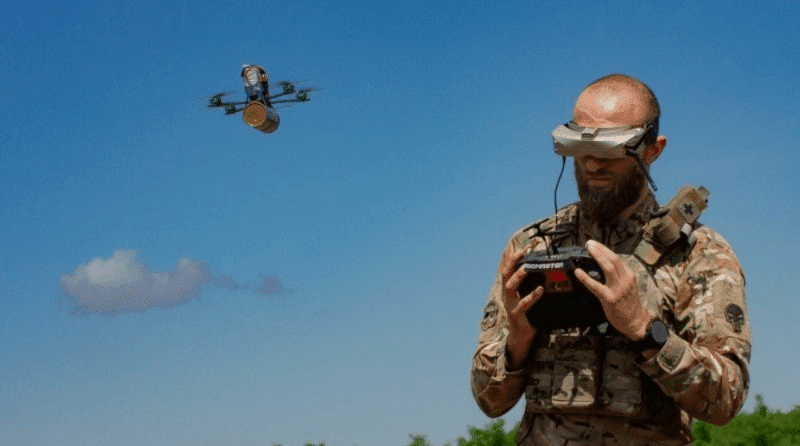
Reaction speed, spatial awareness, multi-screen processing, and fine motor control — all common abilities developed in competitive gaming environments — are also valuable in remotely piloted systems. Ukraine’s extensive use of first-person-view (FPV) drones has made this overlap particularly visible. Volunteer networks and military units have actively recruited individuals with strong simulator or gaming backgrounds to train as drone operators.
As Peter W. Singer, a senior fellow at the New America Foundation and author of Wired for War, has observed:
“War is increasingly mediated through screens. The soldier is no longer always physically present on the battlefield, but the consequences of their actions remain very real.”
Remote operation changes the nature of human engagement with conflict. It introduces physical distance between operator and battlefield. That distance can improve safety and operational flexibility. But it also alters how decisions are experienced psychologically.
The Psychological Distance Problem
Psychologists and military researchers have long studied how distance influences human decision-making in violent contexts.
Dave Grossman, a former U.S. Army Ranger and author of On Killing, has written extensively about how increasing physical and emotional distance from a target can make lethal action psychologically easier to perform. According to Grossman, historical shifts in weapon systems — from hand-to-hand combat to long-range weapons — have consistently changed the mental dynamics of combat.
Remote systems extend that distance further.
Operators may be thousands of kilometers away from the physical environment in which their decisions take effect. Instead of seeing the battlefield directly, they observe it through sensor feeds, thermal imagery, and telemetry overlays.
This does not necessarily reduce psychological stress — in fact, research from RAND and the U.S. Air Force has shown that drone operators can experience significant levels of cognitive strain and moral injury. But it does change the structure of the decision environment.
Actions are taken through interfaces, not physical proximity.
And that matters when systems become increasingly autonomous.
Autonomy Raises the Stakes
Autonomous and semi-autonomous vehicles introduce a new layer of complexity.
Unlike traditional remote-controlled systems, autonomous platforms increasingly incorporate machine learning, automated targeting assistance, and adaptive navigation. Human operators may supervise rather than directly control every action.
This changes the role of the human operator from direct pilot to decision supervisor.
At the same time, many of the engineers developing these systems come from software, robotics, or gaming backgrounds where experimentation and creative iteration are core values. Those environments are productive for innovation, but they do not always emphasize operational consequences in the same way military organizations historically have.
Autonomous defense systems are not consumer products. They are tools operating in environments where errors carry geopolitical consequences.
That difference requires a development culture that balances creativity with discipline.
The Missing Layer in Defense Technology Standards
Most current standards governing autonomous systems focus on technical criteria:
- system safety
- software validation
- cybersecurity
- reliability testing
- communications resilience
These are essential. But they address only part of the system.
Complex defense technologies operate at the intersection of machines and humans. Human-machine interaction, operator cognition, and psychological context are equally important components of system reliability.
Research by RAND and NATO on military human factors has repeatedly shown that many operational failures in complex systems originate not from hardware faults but from misunderstandings between human operators and automated systems.
When autonomy increases, that interaction becomes more critical.
Interfaces influence decision speed. Feedback loops shape operator confidence. Training environments influence how systems are perceived whether as serious operational tools or as technological experiments.
In other words, design choices influence mindset.
Why Psychological Standards Matter
If autonomous defense technologies continue to expand and all evidence suggests they will — development frameworks will need to evolve accordingly.
Responsible system design should consider psychological and operational factors alongside technical ones.
This could include:
Operational exposure for engineering teams
Developers who understand the environments in which their systems operate are better positioned to design for reliability and consequence.
Human-machine interaction review
Interfaces should be evaluated not only for usability but for how they shape operator perception, attention, and decision confidence.
Training environments that emphasize consequences
Simulation environments are essential for training. But they should reinforce operational responsibility rather than unintentionally gamifying outcomes.
Structured supervision frameworks
As autonomy increases, clarity around human authority and system oversight becomes essential.
These measures are not about restricting innovation. They are about ensuring that technological progress remains aligned with operational responsibility.

The Responsibility of the Defense Technology Ecosystem
The defense technology sector is undergoing a period of rapid growth. Venture capital investment in defense startups has expanded significantly in recent years, while governments around the world are accelerating procurement of unmanned and autonomous systems. This combination of capital, innovation, and urgency creates enormous opportunity. It also creates responsibility.
The organizations building the next generation of autonomous systems; startups, research labs, defense contractors, and investors are shaping technologies that will influence how security is managed for decades.
In this environment, technical capability alone is not enough. Operational maturity matters. Cultural awareness matters. Psychological understanding matters.
At UAX, we believe that technical diligence in autonomous systems must examine not only engineering architecture but also operational assumptions, human-machine interaction, and the environments in which these technologies will ultimately be deployed. Autonomous systems do not operate in laboratories. They operate in complex human environments.
Understanding that difference early is essential.
Conclusion
Technology has always reshaped warfare.
But throughout history, one principle has remained constant: the tools of conflict must be handled with discipline.
As autonomous systems become more capable, the line between simulation and reality will become easier to blur at the interface level. Screens, sensors, and software can make complex operations feel abstract.
The responsibility of developers, operators, and decision-makers is to ensure that the systems themselves and the cultures that build them, never lose sight of what those technologies represent.
Autonomous vehicles may navigate the battlefield.
But accountability will always remain human.