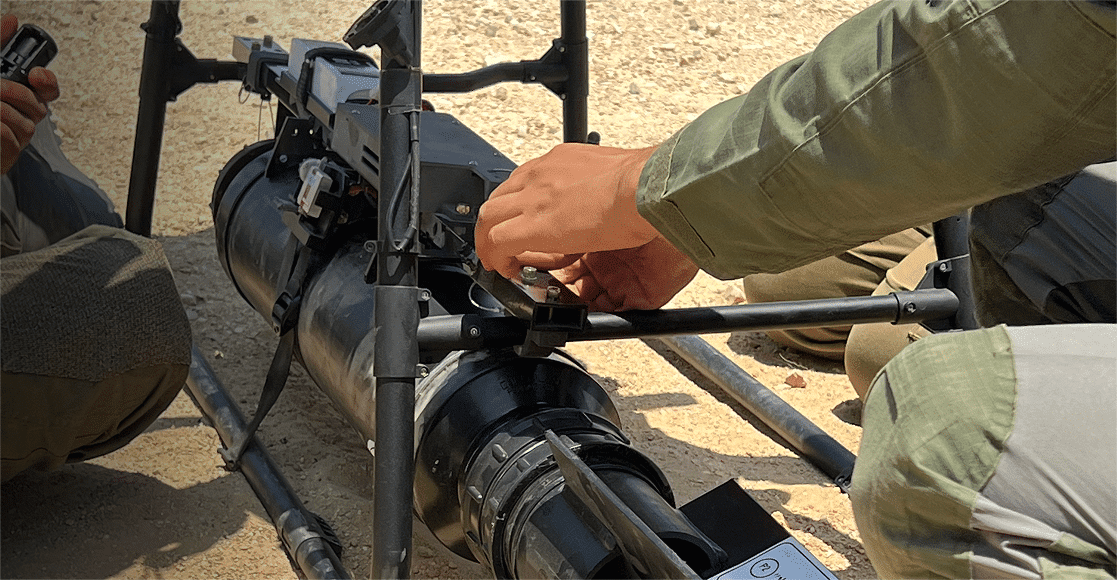
Cheap drones and million dollar missiles. The cost asymmetry in modern drone warfare is becoming the defining factor in the current conflict. For decades, military advantage was largely a function of capital.
Bigger budgets meant better equipment.
More funding meant technological superiority.
That equation is breaking.
The next generation of warfare is not defined by single, expensive systems, but by large-scale, adaptive, and low-cost autonomous technologies.
Drones.
Swarms.
Attritable platforms designed to be lost.
We are entering the era of affordable mass.
Cheap Drones vs Million Dollar Missiles: The WSJ Said It Out Loud
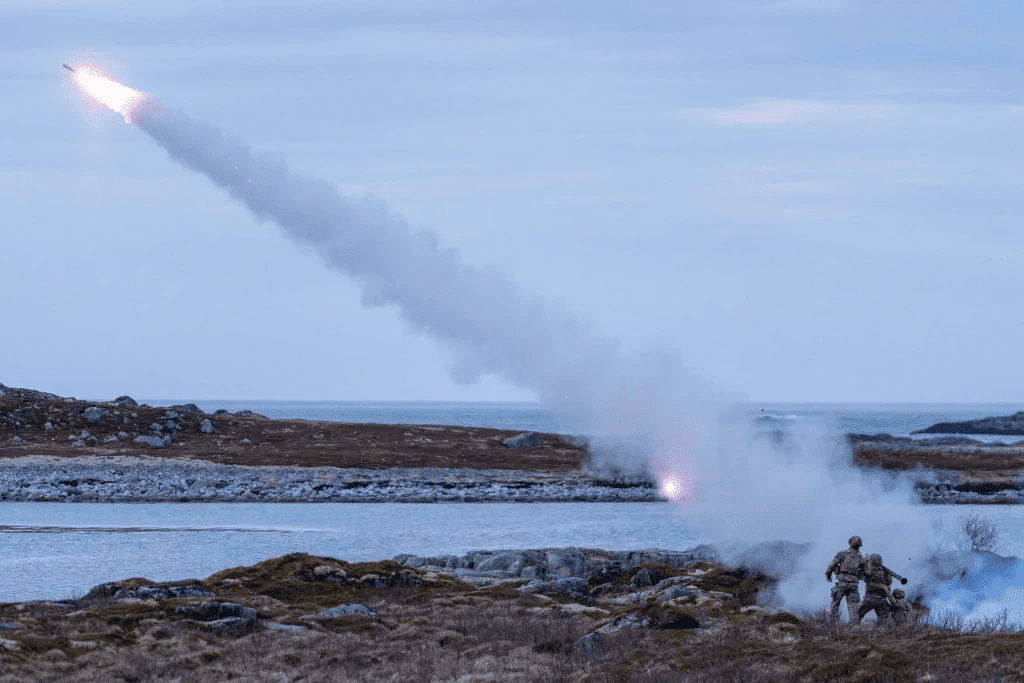
As highlighted in this week’s Wall Street Journal report, America is shooting down cheap drones with million-dollar missiles and a fix is in the works.
Iran’s Shahed drones cost between $20,000 and $50,000. U.S. interceptors — Patriots, THAAD — cost millions. Two days into the current conflict, the U.S. had already burned through a reported $5.6 billion in munitions, as detailed in CNBC’s coverage of the defense-tech response.
The math is not complicated. The math is the problem.
“We cannot afford to shoot down cheap drones with $2 million missiles. And we ourselves must be able to field large quantities of capable attack drones.” — Pete Hegseth, December 2025
This is not a new observation. It is now, finally, a mainstream one.

When Cheap Drones vs Million Dollar Missiles: Becomes the Strategy
For decades, the assumption in Western defense was that technological superiority justified cost. The adversary had less. You had better. That gap was the strategy.
That logic collapses when the adversary’s asset costs $30,000 and yours costs $4 million. It collapses further when they can produce at volume and you cannot.
The side spending more per exchange can still lose. That is the new reality of attritional drone warfare.
Who Is Winning the Cheap Drones vs Million Dollar Missiles Race
Defense-tech investment nearly doubled to $49.9 billion last year, up from $27.3 billion in 2024, according to Pitchbook data. The signal from capital markets is unambiguous: this sector is being taken seriously.
But the distribution of that capital tells a more complicated story.
Anduril, Palantir, and SpaceX alone account for 88% of defense-tech contract dollars in 2025. Despite all the noise around the broader ecosystem, spending on non-traditional contractors still represents less than 1% of total Pentagon contract value.
The investment is real.
The deployment at scale is not there yet.
The companies gaining traction are the ones attacking the cost structure directly. Anduril’s attritable drone YFQ-44A flew for the first time in late 2025 and already holds a multi-billion-dollar ceiling contract with the Pentagon. Epirus is scaling directed-energy counter-drone systems. A wave of smaller, unnamed startups many operating in stealth are on track to double production this year, contingent on government contracts.
That last part is the bottleneck. Demand is insatiable. But most defense-tech companies told CNBC they need contracts before committing to new production capacity. The government procurement cycle is still the rate-limiting factor in a sector that needs to move at startup speed.
“America was built on competition, so let’s be competitive. Let the companies that have the best technology win, because it’s only beneficial to our country.” — Brett Velicovich, co-founder of Powerus.
Trump’s $185 billion Golden Dome missile defense initiative is opening new doors for startups across shipbuilding, drone manufacturing, and counter-UAS. The contracts that follow will determine which companies move from prototype to prime and which stay in the demo-day circuit.
The Response Is Underway — But It’s Early
The Army is evaluating everything from cheaper interceptor missiles to bullets, lasers, and directed-energy systems as alternatives to the current $1M+ per engagement model. The goal is cost parity — or at minimum, cost compression.
Anti-drone ammunition that fires from standard NATO rifles. Laser systems that cost $3.50 per shot versus $4 million per Patriot intercept. Modular interceptors built on commercial components at a fraction of legacy system costs.
The doctrine is shifting. The question is whether production can keep pace with the threat.
What UAX Is Watching: The Cheap Drones vs Million Dollar Missiles Problem
The cost asymmetry problem is now the central variable in every evaluation we run. The question is no longer whether a system is technically superior.
What is the unit economics at scale?
What is the production ramp?
Can this company surge from 100 to 10,000 units in 90 days?
What is the attrition tolerance built into the platform design?
Companies that cannot answer those questions are building for a threat model that no longer exists. The ones that can are building for the next decade of conflict and the next decade of returns.
The WSJ headline is the signal. The capital that follows it will define who wins. For more on how UAX approaches technical due diligence on autonomous systems, visit UAX.