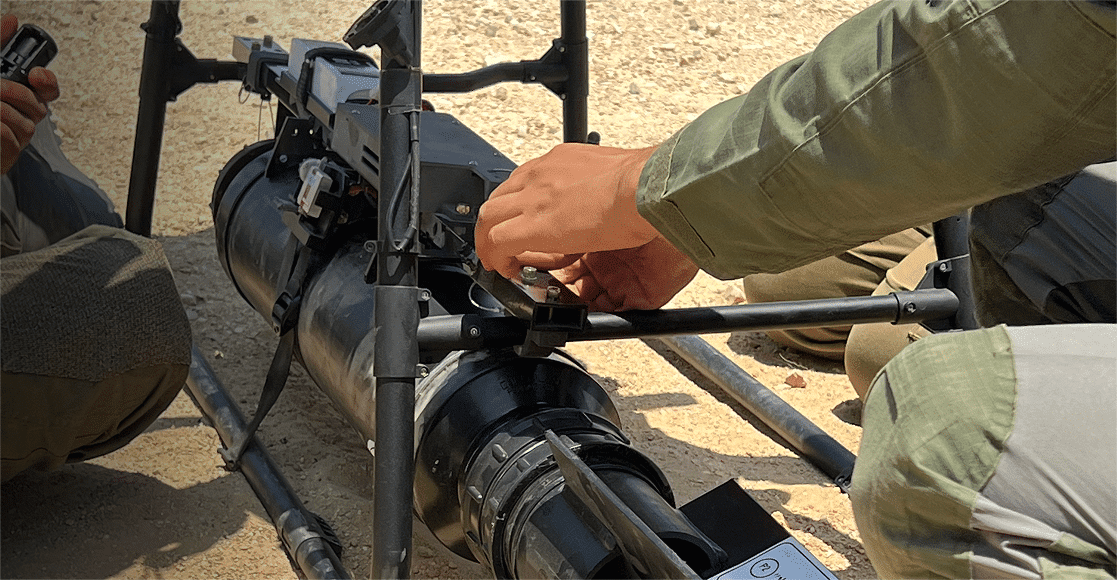
The cost of a wrong procurement choice isn’t just measured in lost capital, but in compromised national security, the rules of drone warfare 2026 have fundamentally changed.
In 2026, the “drone” is no longer a peripheral tool of the modern military; it is the cornerstone of the integrated battlefield. The conflict paradigms of the early 2020s have matured into a permanent state of Software-Defined Warfare. For governments and military entities, procuring the next generation of Unmanned Aerial Systems (UAS) is no longer just about aerodynamics and battery life,it is a high-stakes bet on artificial intelligence, supply chain sovereignty, and mass-producibility.
As we witness the emergence of “loitering munitions” and “collaborative combat aircraft,” the cost of a wrong procurement choice isn’t just measured in lost capital, but in compromised national security.
The 2026 Drone Warfare Shift: From Hardware to Hivemind
The primary evolution in 2026 is the transition from Remote-Piloted Vehicles (RPV) to Autonomous Mission Systems. In previous years, a drone required a one-to-one pilot-to-platform ratio. Today, the U.S. Department of Defense (DoD) and global powers are investing billions into systems that allow a single operator to command entire “swarms” or “teams” of drones that communicate, navigate, and strike with minimal human intervention.
This shift is driven by three core pillars:
- Electronic Warfare (EW) Resilience: Drones must now operate in “GPS-denied” environments where signal jamming is the norm. According to Army Fiscal 2026 Budgetary Estimates, the priority has shifted to platforms that utilize visual navigation and edge AI to remain operational when satellite links are severed.
- Attrition-Based Logic: High-cost, exquisite platforms are being replaced by “affordable mass.” The goal is to deploy low-cost drones that are expendable but lethal, ensuring sustained combat capability without bankrupting the defense budget.
- Edge AI: Real-time target recognition and decision-making happen on the drone itself, not in a remote data center. This slashes reaction times to milliseconds and allows for autonomous mission completion even in contested airspace.
Case Study: The UVision-Mistral Strategic Standard (2026)
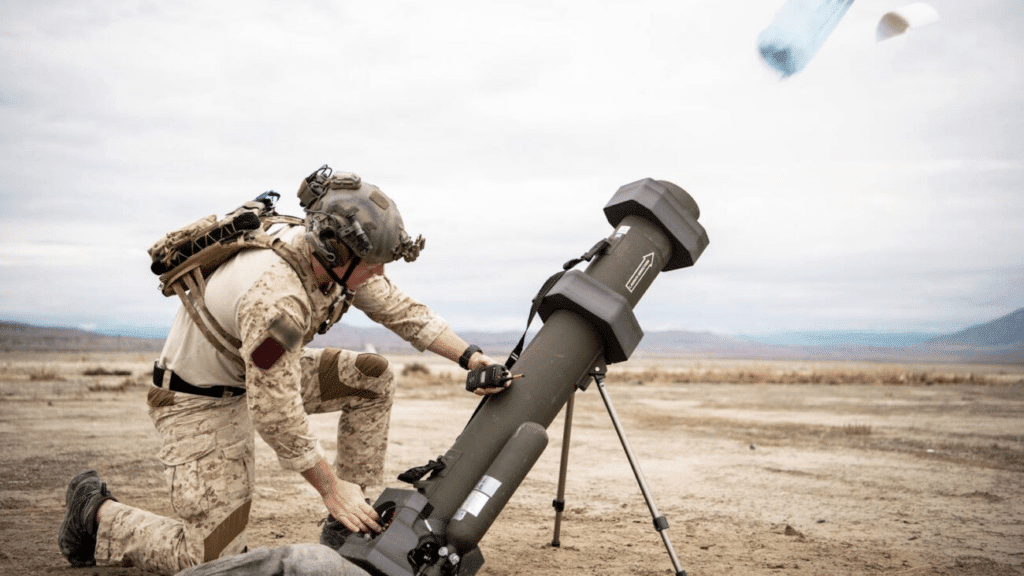
To understand where the billion-dollar deals are flowing, we look at the $982 million multi-year contract awarded by the U.S. Army to Mistral Inc. and its partner UVision Air in the first quarter of 2026.
- The Contract: An Indefinite Delivery, Indefinite Quantity (IDIQ) contract for the Hero-120 Loitering Munition system.
- The “Why”: This deal succeeded because it addressed the “Abortion Capability” gap. Unlike standard missiles, the Hero-120 allows an operator to abort a strike mid-flight if a non-combatant is identified, then re-engage a different target or return to orbit.
- Strategic Integration: By establishing domestic manufacturing in Virginia and Florida, the partnership satisfied National Defense Authorization Act (NDAA) security requirements while providing a platform that has been iteratively refined in active high-intensity electronic warfare environments.
The Billion-Dollar Procurement Checklist
Before a government or military signs a major deal, the following four criteria are non-negotiable in the 2026 market.
| Feature | Requirement | Impact on Operations |
| Sovereign Supply Chain | Full NDAA/ASDA compliance; zero components from “adversary” nations. | Eliminates the risk of “backdoors” or sudden supply cutoffs. |
| Autonomy Level | Level 4+ (Capable of mission completion in GPS-denied/jammed zones). | Ensures the drone remains a lethal asset when communications fail. |
| Interoperability | Must use “Open Architecture” (e.g., Lattice or Hivemind compatible). | Prevents “vendor lock-in” and allows for rapid, modular software updates. |
| Cost-to-Kill Ratio | “Expendable” unit pricing (e.g., <$50k for loitering munitions). | Allows for sustained conflict mass without exhausting resources. |
Red Flags: When to Walk Away from a Deal
The 2026 market is crowded with “legacy” aerospace firms trying to pivot. For a strategic research piece, we must highlight the warning signs for investors and procurement officers:
- Proprietary “Walled Gardens”: If a drone cannot talk to other systems via a common API (like JAUS or STANAG), it is a liability. Modern warfare is a network, not a series of silos.
- Dependence on Satellite Links: Any system that requires a persistent satellite connection will be a paperweight in a high-intensity conflict with a peer adversary who employs sophisticated jamming.
- Lack of “Green UAS” Certification: As of 2026, the American Security Drone Act (ASDA) is in full enforcement. Any fleet not reviewed against these updated restrictions faces immediate grounding and loss of federal funding.
Conclusion: The Software-First Future
The billion-dollar deals of 2026 prove that the “hardware” is now secondary to the “brain.” As indicated by current Market Analysis for 2026-2033, the winners in this space are those who prioritize AI, supply chain security, and interoperability.
For the leadership at UAX, the message is clear: The next decade of defense will not be won by the fastest plane, but by the smartest code and the most resilient, sovereign supply chain.
Research Sources
- TechTime News: UVision Secures $982 Million Contract with the U.S. Army
- Manufacturing Dive: DoD Industrial Base Expansion & NDAA Compliance 2026
- DefenseScoop: Army Fiscal 2026 Budget: The Shift to Loitering Munitions
- Coherent Market Insights: Military Drone Market Projections 2026-2033